
Understanding Social Engineering
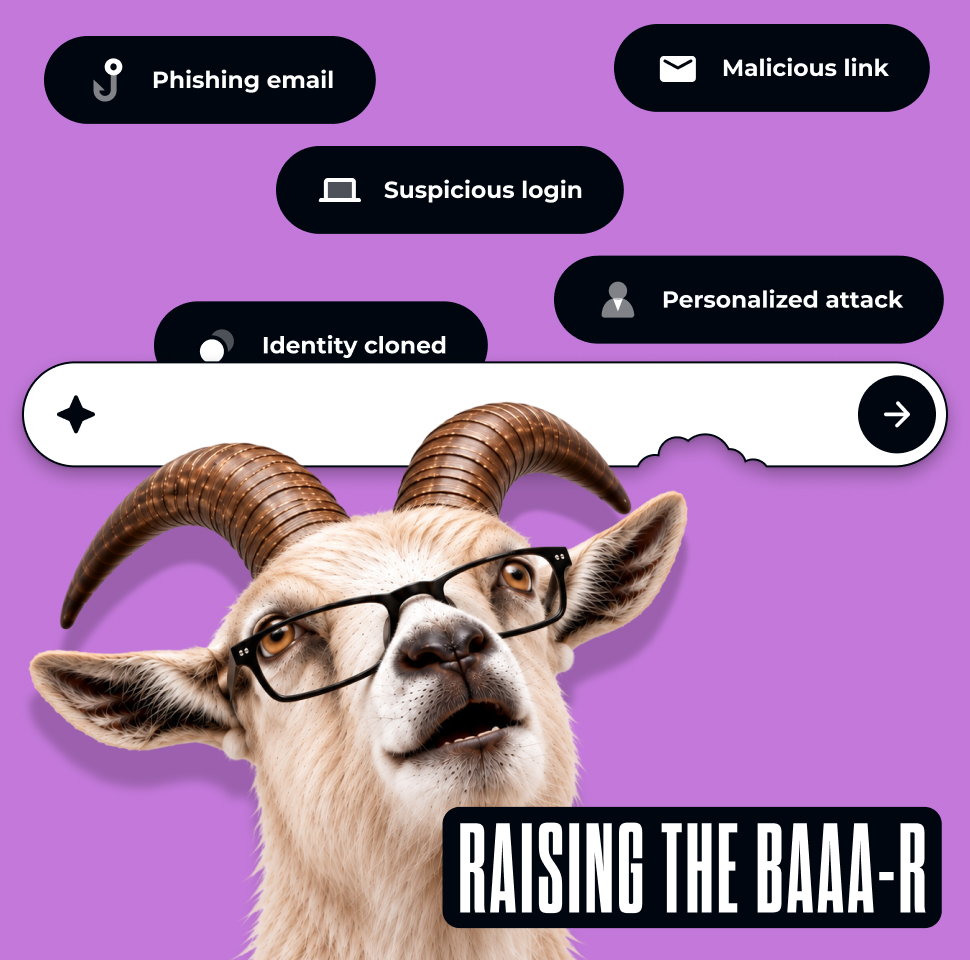
Most cyberattacks exploit people, not technology. Understanding how social engineering works helps employees recognize manipulation, make better security decisions, and reinforces the importance of ongoing security awareness training.
- People are the target – Attackers exploit trust, curiosity, fear, or urgency to persuade people to take unsafe actions.
- Manipulation, not malware – Social engineering relies on psychological tactics rather than technical exploits to gain access or steal information.
- Many forms, one objective – Phishing, business email compromise, smishing, vishing, and impersonation all use deception to obtain credentials, money, or sensitive data.
The Core Tactics: Phishing, Pretexting, Baiting, Tailgating, and Vishing
Each tactic uses a different setting and a different trigger, but all rely on the same principle: manipulate a person, not a system. Recognizing the pattern behind each one allows an employee to pause and question a request, regardless of the channel it arrives through.
- Phishing: a fraudulent email, text, or message designed to trick someone into clicking a link, opening an attachment, or handing over credentials
- Pretexting: an attacker invents a believable scenario, posing as IT support, a vendor, or an executive, to extract information or access
- Baiting: a tempting offer, a free download, a USB drive left in a car park, used to lure someone into compromising their own device
- Tailgating: physically following an authorized person through a secure door without their own access credentials
- Vishing: a phone or voice call, sometimes using AI-cloned voices, used to pressure someone into an urgent action or disclosure


How Attackers Choose and Target Their Victims
Attackers carefully select victims who offer the greatest opportunity for financial gain or privileged access. By researching people, roles, and publicly available information, they craft highly convincing attacks that are difficult to distinguish from legitimate requests.
- High-value roles first - Finance, executives, and IT administrators are targeted for their access and authority.
- Public information is weaponized - Company websites and social media help attackers personalize convincing scams.
- New employees are vulnerable - Recent hires are more likely to trust unusual requests or unfamiliar processes.
- Every employee is a potential target - Attackers adapt their approach based on each person's role and level of access.
How Training Reduces the Chance Staff Fall for These Tactics
Build a Habit of Verification
Training reduces human risk by replacing instinctive reactions with a habit of verification. Through realistic phishing simulations and regular, bite-sized lessons, employees learn to pause, assess, and respond appropriately instead of acting on impulse.
Small Changes, Big Security Gains
With ongoing training, urgency becomes a prompt to verify rather than react, unusual requests are confirmed through a trusted second channel, and repeated reinforcement turns good security practices into everyday habits.
Confidence, Not Suspicion
The objective is not to make employees distrust every email or request. It is to build the confidence and discipline to pause, verify high-risk or unexpected requests independently, and make informed security decisions without disrupting normal business.
Putting Social Engineering Training Into Practice
Social engineering exploits human trust rather than technical vulnerabilities, so no single security tool can eliminate the risk. The most effective defense is a structured, continuous security awareness program that equips employees to recognize and respond to evolving attack techniques.
Cover every tactic, not just phishing
Employees who only recognise email-based lures remain exposed to pretexting, baiting, tailgating, and vishing, so training should address all five.
Make verification a habit, not a warning.
The goal isn't to make staff suspicious of everything, it's to build a practised pause before acting on unusual or urgent requests.
Package it as a standard service.
A defined, recurring cadence, lessons monthly, simulations quarterly, reporting on request, makes the service easy to price and deliver consistently across every client.

Social Engineering Frequently Asked Questions
Social engineering is the manipulation of people, rather than systems, into taking an action that compromises security, such as clicking a link or sharing a password, by exploiting trust or urgency.
Phishing uses a fraudulent message to prompt a click or disclosure. Pretexting invents a believable scenario to extract information. Baiting uses a tempting offer or device to lure someone into compromising their own system.
Tailgating is when an unauthorized person physically follows an authorized employee through a secure door or access point without using their own credentials, relying on politeness or inattention to gain entry.
They typically hold financial authority or privileged access, meaning a successful attack against them has a far higher payoff than targeting a random employee, which makes them worth more attacker effort to research.
Continuously, not annually. Short, repeated lessons combined with regular simulated tests build lasting habits far more effectively than a single yearly session that fades from memory within weeks.