Choosing between Acronis and Veeam for your data protection needs often comes down to these five critical questions:
- Do you need backup and recovery only, or do you also need integrated email security and security awareness training?
- Is your primary focus protecting enterprise data centers, or serving diverse SMB clients as an MSP?
- How important is near-instant data recovery versus comprehensive disaster recovery orchestration?
- Are you willing to manage complex licensing models, or do you prefer straightforward per-user or per-GB pricing?
- Do you want a solution purpose-built for the MSP channel, or one primarily designed for enterprise IT teams?
In short, here's what we recommend:
�� Acronis is the unified cyber protection pioneer, combining backup, disaster recovery, and cybersecurity into a single agent and console. Its Active Protection technology guards against ransomware in real-time, and its global network of data centers provides data sovereignty options worldwide.
Acronis has expanded to include security awareness training and advanced email security capabilities. While Acronis excels at consolidating multiple security functions, MSPs often find the dashboard overcomplicated and the policy engine difficult to navigate. The all-in-one approach means some modules don't feel cohesive, and heavy agents can impact endpoint or server performance.
�� Veeam is a leading vendor in the enterprise backup and recovery market, known for its reliability, SureBackup verification, and Instant VM Recovery capabilities. Its integrations with VMware, Hyper-V, and major cloud platforms make it a strong choice for organizations with significant virtualization investments.
However, Veeam can be complex to deploy and maintain for MSPs and internal IT teams, with heavy reliance on on-premises hardware that many customers increasingly want to eliminate. Licensing can become unpredictable or expensive as estates grow, and Veeam offers no native email security or security awareness training, requiring MSPs to source these capabilities separately.
Both platforms have earned their market positions through years of innovation. But the data protection landscape has evolved, and MSPs increasingly need solutions that combine robust backup with proactive security measures, without the complexity of assembling multiple point solutions.
�� CyberSentriq represents a new approach, purpose-built for MSPs from the ground up. Formed from the merger of TitanHQ and Redstor, CyberSentriq delivers integrated protection across a growing range of cyber risks than traditional backup-focused solutions. With a channel-exclusive model, AI-powered malware detection in backups, streaming recovery with near-zero RTO, and comprehensive two-layer email security plus security awareness training, CyberSentriq offers MSPs a unified platform to protect their clients from both data loss and cyber threats, all deployable in under 30 minutes.
If you're an MSP looking for a partner that prioritizes your success and offers protection across the full threat landscape, see how CyberSentriq can transform your service offerings.
Acronis vs Veeam vs CyberSentriq at a glance
|
|
Acronis |
Veeam |
CyberSentriq |
|
Primary focus |
Unified cyber protection |
Enterprise backup & DR |
MSP-centric security + backup |
|
Email security |
⭐⭐⭐ Available (Advanced pack) |
❌ Not included |
⭐⭐⭐⭐⭐ Two-layer defense (SpamTitan + PhishTitan) |
|
Security awareness training |
⭐⭐⭐ Available (2025) |
❌ Not included |
⭐⭐⭐⭐⭐ Comprehensive with phishing simulation |
|
Backup & recovery |
⭐⭐⭐⭐ Solid with cyber focus |
⭐⭐⭐⭐⭐ Enterprise-grade |
⭐⭐⭐⭐ Cloud-native with InstantData™ |
|
Recovery speed |
⭐⭐⭐ Instant Restore available |
⭐⭐⭐⭐⭐ Instant VM Recovery |
⭐⭐⭐⭐⭐ Streaming recovery, near-zero RTO |
|
MSP-first design |
⭐⭐⭐⭐ Strong multi-tenancy |
⭐⭐⭐ Enterprise-focused |
⭐⭐⭐⭐⭐ Purpose-built for MSPs |
|
Channel model |
⭐⭐⭐ Mixed (consumer direct, MSP through channel) |
⭐⭐⭐⭐ Channel-driven (ProPartner) |
⭐⭐⭐⭐⭐ Channel-exclusive |
|
Pricing transparency |
⭐⭐ Complex with tiered commitments |
⭐⭐⭐ Workload-based licensing |
⭐⭐⭐⭐⭐ Simple, customizable bundles |
|
Learning curve |
⭐⭐ Steep, feature overload |
⭐⭐⭐ Moderate |
⭐⭐⭐⭐ Straightforward |
The key difference: Backup vendors vs cyber protection platforms
The comparison between Acronis and Veeam often fails to highlight a critical aspect: modern data protection isn't just about backing up files. It's about protecting against the threats that cause data loss in the first place.
Ransomware doesn't care how good your backups are if it can encrypt them too. Phishing attacks don't wait for your backup window. Business email compromise costs organizations millions before anyone thinks to check the backup logs.
Acronis recognized this reality and pivoted to "cyber protection," attempting to combine backup with security.
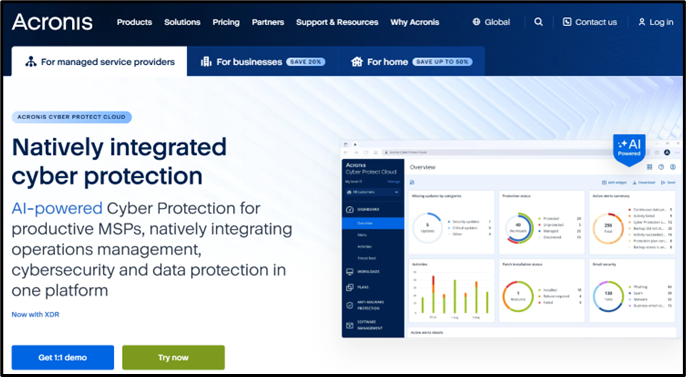
The approach is sound, and Acronis continues to expand its security capabilities. However, the execution often leaves MSPs managing a fragmented platform where modules don't feel like one coherent system, and the training overhead for technicians managing large client portfolios can be substantial.
Veeam has traditionally focused on backup and recovery excellence, integrating with security vendors rather than building native security tools, though recent moves (like the planned acquisition of Securiti AI) suggest some expansion in this direction.
For MSPs, this typically means sourcing email security, security awareness training, and web filtering from additional vendors, and Veeam lacks a unified way to protect hybrid and SaaS workloads all under one solution.
CyberSentriq takes a different path entirely.
Rather than bolting security onto backup or relying on partners to fill gaps, it combines proven, purpose-built solutions from two companies with nearly 30 years of combined pedigree in their respective domains.
The email security stack delivers two-layer defense: SpamTitan at the gateway blocks threats before they reach inboxes, while PhishTitan inside Microsoft 365 catches advanced attacks that slip through. The backup platform protects whatever gets through. Together, they address the full threat lifecycle with defense-in-depth that doesn't require assembling multiple point solutions.
Acronis brings cyber protection to backup, but struggles with complexity
Acronis deserves credit for recognizing that backup alone isn't enough.
Their Active Protection technology uses AI to detect ransomware behavior in real-time, and their ability to scan backups for malware before restoration prevents the nightmare scenario of recovering an infected system.
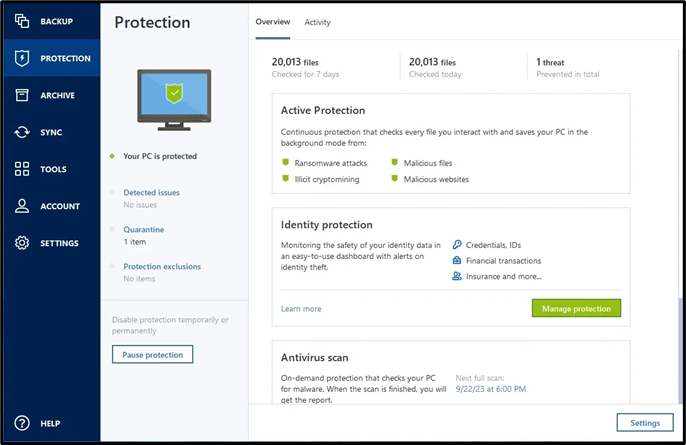
The unified approach has real advantages. One agent, one console, one vendor. For MSPs tired of managing multiple tools, the promise is compelling. And for specific use cases (particularly protecting remote workers' endpoints), Acronis delivers value. The company has also expanded its offerings to include security awareness training and advanced email security through its add-on packs.
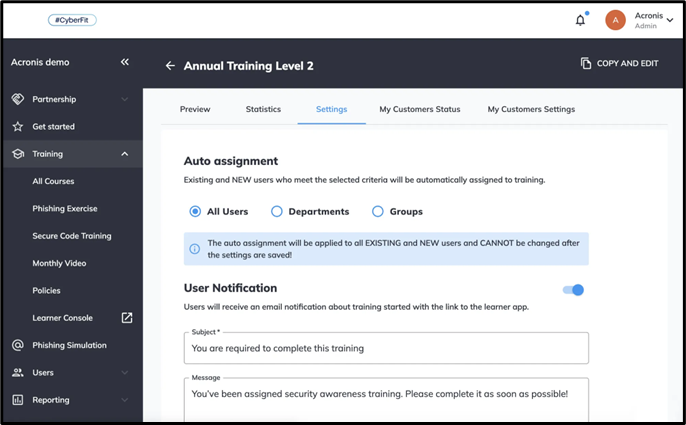
But the reality often falls short of the promise for MSPs managing diverse client portfolios.
Acronis's dashboard and policy engine can be overcomplicated, slowing teams down rather than enabling efficiency.
The sheer breadth of features (backup, antivirus, patch management, remote desktop, URL filtering) creates a steep learning curve that consumes valuable technician time. The agents can be heavy, impacting endpoint or server performance, and support quality can be inconsistent, with some users reporting longer resolution times for technical issues.
Pricing is another consideration: costs can increase when extra features are added through various packs and tiers. While Acronis positions itself as suitable for any business size, its enterprise-focused features can feel like overkill for SMB-focused MSPs, and recovery speeds may lag behind streaming-based approaches when time is critical.
Some organizations with advanced threats may prefer dedicated security vendors like CrowdStrike or SentinelOne for endpoint protection, depending on their specific requirements.
For MSPs, it's worth noting that Acronis sells consumer products directly while its MSP-focused Cyber Protect Cloud operates through the channel. Some partners view this mixed approach as potential channel conflict, though Acronis leadership emphasizes their commitment to channel partners for business products.
Veeam excels at enterprise backup, but leaves security gaps
Veeam built its reputation on doing one thing exceptionally well: protecting virtual machines.
Their early focus on VMware backup made them the go-to solution for organizations embracing virtualization, and they've successfully expanded to cover physical servers, cloud workloads, and SaaS applications.
The technology is impressive. SureBackup automatically verifies that every backup is recoverable by actually booting the VM in an isolated environment and running tests. Instant VM Recovery can have a failed system running again in minutes. The platform's reliability is well-regarded among IT professionals.
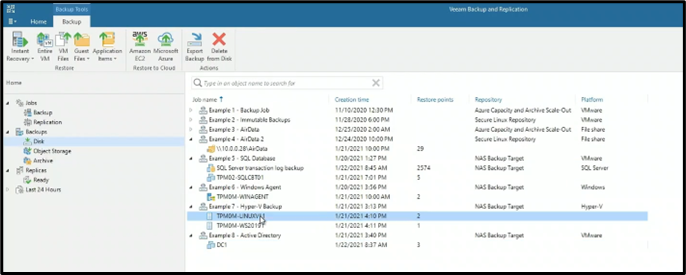
Source: Veeam
For enterprises with dedicated IT staff and significant infrastructure investments, Veeam remains a compelling choice. The depth of features, the breadth of integrations, and the maturity of the platform are hard to match.
But Veeam's enterprise DNA creates significant challenges for MSPs serving smaller clients.
Veeam can be too complex to deploy and maintain for partners and internal IT teams accustomed to leaner operations.
The heavy reliance on on-premises hardware is increasingly problematic as customers want to eliminate appliance dependencies and move to cloud-native architectures. Veeam's licensing model uses workload-based Universal Licenses. Pricing can become unpredictable or expensive as estates grow, requiring consultation with partners or Veeam directly to understand total cost.
Upgrade cycles can introduce downtime or risk, and during critical incidents, some MSPs find restore processes slower or more cumbersome than streaming-based alternatives. Veeam also lacks a unified, elegant way to protect hybrid and SaaS workloads under one platform.
More importantly, Veeam doesn't address the threats that cause most data loss in the first place. There's no email security to stop phishing. No security awareness training to educate users. No web filtering to block malicious sites. MSPs using Veeam must source these capabilities elsewhere, managing additional vendors, additional agents, and additional complexity.
While Veeam works as channel-first through its ProPartner network, it maintains enterprise sales teams that work alongside partners. Some MSPs monitor this structure carefully when evaluating vendor relationships.
CyberSentriq bridges backup and security without compromise
CyberSentriq emerged in 2025 from the merger of two established players: TitanHQ and Redstor. This wasn't a startup combining unproven technologies. It was the integration of two platforms that had already earned the trust of over 3,000 MSP partners and approximately 150,000 SMBs globally.
From TitanHQ comes nearly 30 years of expertise in email security and security awareness, and a unique two-layer approach to email defense:
SpamTitan operates at the gateway level (MX), stopping threats before they ever reach Microsoft 365. It delivers industry-leading spam catch rates with extremely low false positive rates, using dual antivirus engines, AI-powered behavioral analysis, and advanced sandboxing.
With 400+ spam rulesets for precision scoring, clear mail history reporting across multiple M365 tenants, and admin/end-user quarantine views with self-service controls, SpamTitan provides the first line of defense that Microsoft's native protection often misses.
PhishTitan sits inside Microsoft 365 via API, detecting the advanced threats that bypass gateway security: BEC attacks, C-level impersonation, and social engineering attempts.
It monitors internal mail not visible at the gateway, provides time-of-click protection through Link Lock, and enables rapid post-delivery remediation when threats are identified. This two-layer approach; MX on the outside, API on the inside, ensures comprehensive email protection without gaps.
Security Awareness Training transforms the weakest link in security (humans) into a defensive asset through behavior-driven training and realistic phishing simulations. Auto-generated phishing campaigns test users continuously, while reactive training delivers real-time intervention when users exhibit risky behavior.
Measurable risk reporting proves value at quarterly business reviews and demonstrates compliance for regulated industries.
WebTitan blocks malicious websites at the DNS level, preventing users from reaching phishing sites, malware distribution points, and inappropriate content. The AI-driven threat intelligence engine processes millions of DNS requests daily, identifying tens of thousands of new malware iterations each day.
ArcTitan provides cloud-based email archiving with lightning-fast search capabilities, helping organizations meet compliance requirements while reducing storage costs and simplifying eDiscovery.
From Redstor comes cloud-native backup innovation:
InstantData™ streaming recovery delivers near-zero recovery time by streaming data on-demand. When disaster strikes, users don't wait hours for a full restore. They access their critical files immediately while the complete recovery happens in the background.
This patented approach changes what's possible in recovery scenarios, reducing restore times during critical incidents compared to traditional approaches.
AI-powered malware detection scans backups continuously, identifying and quarantining suspicious files before they can be restored. This ensures that recovering from a ransomware attack doesn't simply reintroduce the malware.
Hardware-free architecture eliminates on-premises backup appliances entirely, reducing costs and complexity while enabling rapid deployment.
Unlike solutions that rely on appliance infrastructure, CyberSentriq's cloud-native approach means no appliance cost, no replacement cycles, and no performance limitations from aging hardware. New clients can be protected in minutes, not hours with full deployment achievable in under 30 minutes.
Entra ID Backup protects Microsoft Entra ID (Azure AD) configurations, user data, and policies, a critical capability as organizations increasingly depend on cloud identity infrastructure. This is a differentiator from competitors who focus solely on traditional workloads.
Together, these capabilities create comprehensive protection that addresses threats at every stage, from the phishing email that starts an attack to the streaming recovery that ends it.
Recovery speed determines business impact
When disaster strikes, recovery speed isn't just a technical metric. It's the difference between a minor inconvenience and a business-ending event.
Acronis offers Instant Restore capabilities that can boot a failed system from backup storage, with VMware or Hyper-V mounting the backup as a temporary VM.
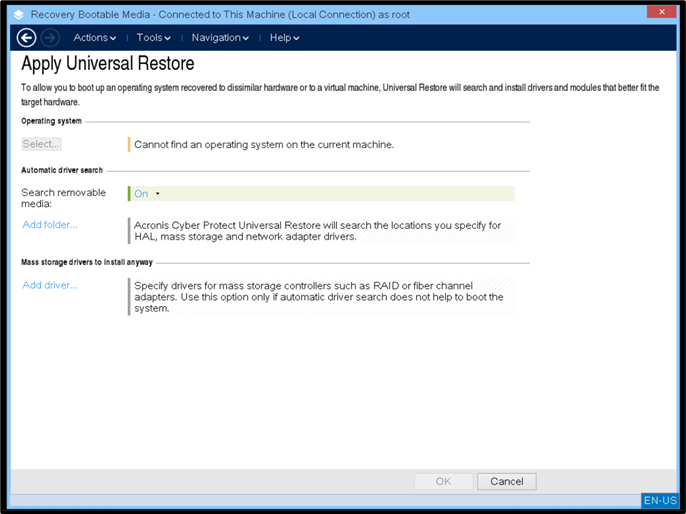
The technology works, but performance depends heavily on the backup storage's capabilities, and recovery speeds can be slower compared to streaming-based approaches. Their Universal Restore feature handles the challenge of recovering to dissimilar hardware by injecting appropriate drivers during restoration.
Source: Acronis
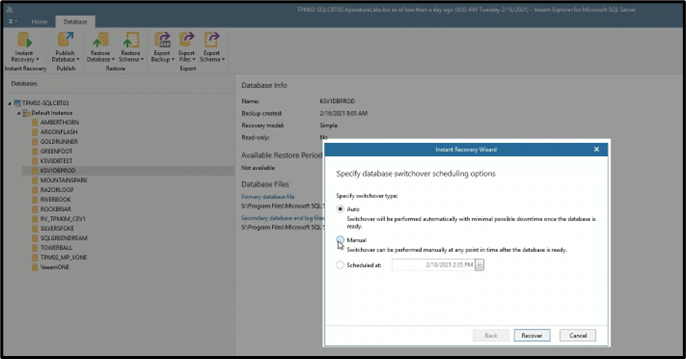
Veeam pioneered Instant VM Recovery and sets a high standard for enterprise recovery speed. Their approach is mature, well-tested, and integrated with major hypervisors.
Source: Veeam
For organizations with significant virtualization investments and the infrastructure to support rapid recovery, Veeam delivers. However, restore processes can be cumbersome during critical incidents, and the approach requires substantial infrastructure investment to achieve optimal performance.
CyberSentriq's InstantData™ takes a different approach.
Rather than mounting backup files as virtual disks (which still requires significant I/O to the backup storage), InstantData™ streams data on-demand directly to users. When someone needs a critical file, they get it immediately. The full dataset continues restoring in the background, but productivity resumes almost instantly. This streaming approach reduces restore times compared to traditional methods.
This distinction matters most for MSPs serving SMBs. Large enterprises typically have the infrastructure to maximize Veeam's capabilities. Smaller organizations often face resource constraints. InstantData™ delivers near-instant recovery without requiring significant investment in high-performance backup storage or on-premises appliances
Pricing models reveal different philosophies
Acronis uses a tiered model that varies by customer segment.
For MSPs using Cyber Protect Cloud, pricing is usage-based with minimum monthly commitments (often starting at $250/month). The "per-workload" or "per-GB" options can work well for predictable environments but create uncertainty for MSPs with variable client portfolios.
Pricing can increase when extra features are added through Advanced packs, and additional costs can emerge from "lost data" charges, storage overages, and various add-on modules.
Veeam's Universal License offers portability across workloads, with pricing based on the number of workloads protected.
Most MSPs will need to work with Veeam partners to determine exact pricing for their specific requirements, and licensing can become unpredictable or expensive as estates grow. Microsoft 365 backup, Salesforce backup, and Kubernetes protection are separate offerings that must be purchased independently.
CyberSentriq offers straightforward, customizable bundle pricing designed for MSP economics.
The Secure Bundle (combining gateway email security and Microsoft 365-native detection) starts at $3.74 per user per month when paid annually. All bundles are highly customizable. This means customers can modify bundles by adding components, and CyberSentriq offers flexible pricing based on specific needs and purchase volumes.
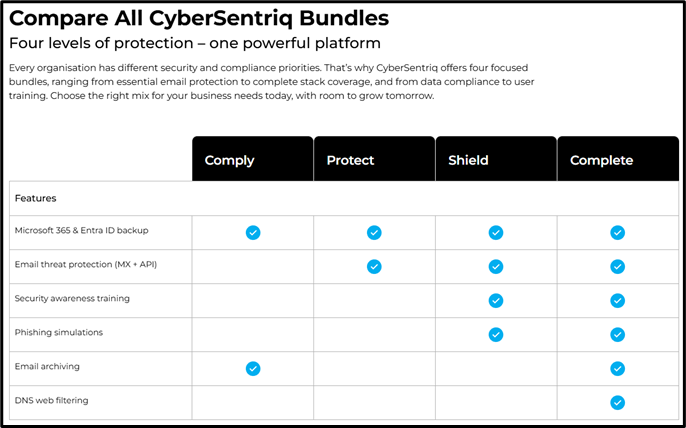
Tiered pricing models (Silver, Gold, Platinum, Top Tier) enable MSPs to increase their margins as they grow. There are no egress fees, no hardware requirements, and no hidden costs that balloon unexpectedly.
For an MSP protecting a 50-user organization with comprehensive security and backup, CyberSentriq's bundled approach offers a number of features. This includes the two-layer email security (gateway + API), DNS filtering, security awareness training, email archiving, and backup with InstantData™ recovery in customizable packages.
Acronis and Veeam on the other hand, often require additional investments, and additional vendors, to match the same capability set.
MSP-centric features make or break your business
Multi-tenancy, simplified billing, and partner-first sales approaches aren't just optional features. For MSPs, they determine whether a platform helps or hinders business growth.
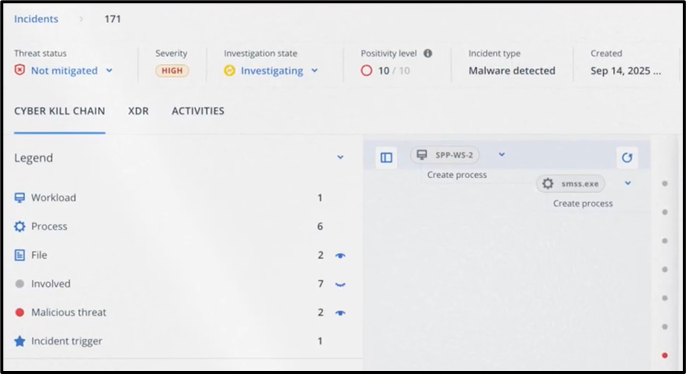
Acronis provides a multi-tenant management console with integrations to major PSA and RMM platforms (ConnectWise, Kaseya, HaloPSA, and others).
Source: Acronis
The platform was designed with MSPs in mind, and it shows. However, Acronis does sell consumer products directly to end customers, which creates a mixed channel approach. The overcomplicated dashboard and policy engine means MSP technicians need substantial training time before they can effectively support clients. This proves too much training overhead for MSPs managing large portfolios.
Veeam has expanded its partner program significantly, but the platform's framework means features are often optimized for dedicated IT teams rather than MSP technicians managing dozens of clients.
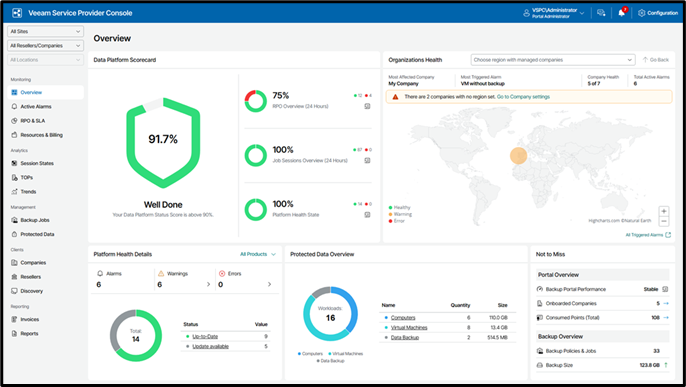
The Service Provider Console (VSPC) adds multi-tenant capabilities, but it's an additional layer rather than a native design principle. While Veeam emphasizes its channel-first approach through the ProPartner network, some MSPs remain attentive to the company's enterprise sales structure.
The reliance on on-premises infrastructure and complex deployment also creates operational challenges for partners seeking to onboard clients quickly.
CyberSentriq operates with an MSP-first model: one contract, one support path, one roadmap, and one Account Manager.
The company is channel-exclusive, going to market through MSPs and distributors rather than directly to end customers, eliminating the channel conflict concerns that arise with other vendors.
The CyberSentriq Partnership Model includes a dedicated Account Manager as a single point of contact for all strategy, pricing, and commercial conversations. Partners receive onboarding and migration assistance with Sales Engineering support, co-selling and enablement through joint discovery calls and demo support, and quarterly account reviews with data-driven insights and early roadmap access.
What sets CyberSentriq apart is the personal relationship partners receive. Someone actually picks up the phone when you call, something MSPs don't often get with vendors of similar size. This accessibility and responsiveness makes working with CyberSentriq easy, with exceptional flexibility in both products and business relationships.
The platform provides multi-tenant management designed for rapid client onboarding, with clean, simple UX and low management overhead.
White-label capabilities allow MSPs to position their own brand front and center with clients. Features like quarantine reports with allow/release capabilities, end-user self-service controls, guided training, and comprehensive reporting reduce support tickets while proving value at QBRs.
Acronis vs Veeam vs CyberSentriq: Which should you choose?
The right choice depends on your specific situation, client base, and business priorities.
Choose Acronis if:
- You want to consolidate backup and endpoint security into a single agent
- Your clients have significant endpoint protection needs (remote workers, BYOD)
- You can invest the time to master a complex but comprehensive platform
- You understand Acronis's mixed go-to-market approach with consumer products sold direct
- Your clients need the global data center network for data sovereignty requirements
Explore Acronis Cyber Protect Cloud for unified cyber protection.
Choose Veeam if:
- You serve primarily enterprise clients with significant virtualization investments
- Your clients have dedicated IT staff who can leverage advanced features
- Budget allows for enterprise-grade pricing and the infrastructure to support rapid recovery
- You're willing to source email security and security training separately
- Your focus is on backup and DR excellence rather than integrated security
Discover Veeam Data Platform's enterprise-grade capabilities.
Choose CyberSentriq if:
- You want a channel-exclusive partner that will never compete with you for customers
- Your clients need protection from both data loss and cyber threats without managing multiple vendors
- Streaming recovery with near-zero RTO would transform your service delivery
- You want two-layer email defense (gateway + API) plus training in one MSP-first bundle
- Transparent, customizable pricing and tiered margins matter to your business model
- You value a vendor where someone actually picks up the phone when you call
- You serve SMBs who need comprehensive protection without enterprise complexity
See how CyberSentriq can unify your security and data protection offerings with a partner that prioritizes your success.
The data protection market has evolved beyond simple backup versus backup comparisons. Modern threats require modern defenses that address the full attack lifecycle, from the gateway to the inbox to the human clicking the link.
For MSPs building sustainable, profitable practices around client protection, the platform that combines proven two-layer email security with innovative streaming backup technology, delivered through a channel-exclusive partnership, offers the clearest path forward.
That's the future CyberSentriq was built to deliver.