For Managed Service Providers (MSPs), this presents a significant challenge. Even when clients have modern endpoint protection, email security, and MFA in place, a single employee clicking a malicious link can lead to credential theft, ransomware deployment, business email compromise (BEC), or data breaches. This is why simulated phishing has become a critical component of modern managed security services.
What Is Simulated Phishing?
Simulated phishing is a cybersecurity training method that safely recreates real-world phishing attacks within a controlled environment. Organizations send realistic phishing emails, smishing messages, or social engineering scenarios to employees to assess their ability to identify and respond to potential threats.
The objective isn't to "catch people out" it's to build security awareness, reinforce good cyber habits, and identify areas where additional training may be needed. For MSPs, phishing simulations provide a measurable way to improve client security posture while demonstrating cybersecurity value.

Human Error Remains the Biggest Security Risk
Why MSPs Should Include Simulated Phishing in Their Security Stack
Most cybersecurity controls focus on protecting networks, endpoints, and cloud environments. However, attackers continue to exploit people because they are often the easiest route into an organization.
Employees regularly receive emails related to:
- Microsoft 365 account alerts
- Password resets
- Invoice requests
- File-sharing notifications
- HR communications
- Executive messages
Attackers design phishing campaigns to blend seamlessly into daily business operations. Without regular exposure to realistic simulations, users often struggle to distinguish legitimate communications from malicious ones.
Reduce Risk Across the Entire Client Base
For MSPs managing dozens or hundreds of clients, simulated phishing enables consistent, scalable security awareness training across multiple organizations without increasing operational overhead. By regularly exposing users to realistic phishing scenarios, MSPs can identify high-risk behaviors, measure improvements over time, and reinforce security best practices in a way that is both practical and engaging.
Benefits include:
- Reduced phishing susceptibility
- Improved reporting of suspicious emails
- Increased security awareness
- Lower likelihood of ransomware infections
- Better protection against Business Email Compromise (BEC)
Rather than reacting to incidents after they occur, MSPs can proactively reduce risk before users become victims. Simulated phishing also provides valuable reporting and metrics, helping MSPs demonstrate the effectiveness of their security services, support compliance initiatives, and have more meaningful cybersecurity conversations with clients.

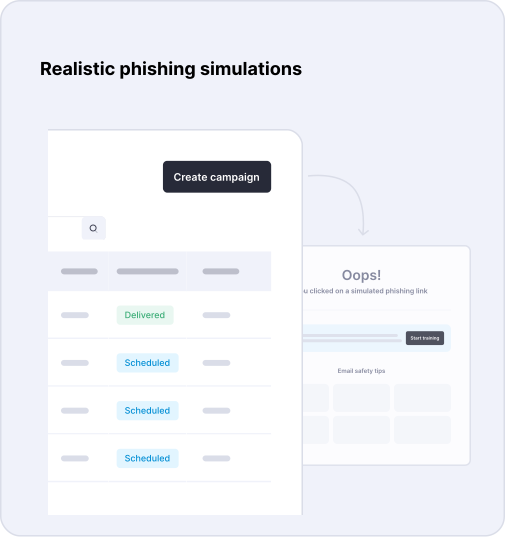
Demonstrate Measurable Security Outcomes
The Business Case for Simulated Phishing
Beyond the cybersecurity benefits, simulated phishing helps MSPs strengthen client relationships, demonstrate ongoing value, and create new recurring revenue opportunities. By moving security awareness from a one-time training exercise to a continuous risk management program, MSPs can position themselves as strategic security partners rather than reactive service providers. One of the biggest challenges MSPs face is proving the ROI of cybersecurity. While many security investments work behind the scenes, phishing simulations provide tangible data that clients can easily understand and act upon.
Phishing simulations provide clear metrics such as:
- Click rates
- Credential submission rates
- Reporting rates
- Department risk scores
- Training completion rates
- Improvement trends over time
These metrics help MSPs demonstrate progress and support strategic security conversations with clients. Regular reporting allows MSPs to highlight reductions in user risk, identify vulnerable departments or individuals, and showcase the effectiveness of ongoing security awareness initiatives. This data-driven approach not only strengthens client trust but also helps justify continued investment in cybersecurity services.
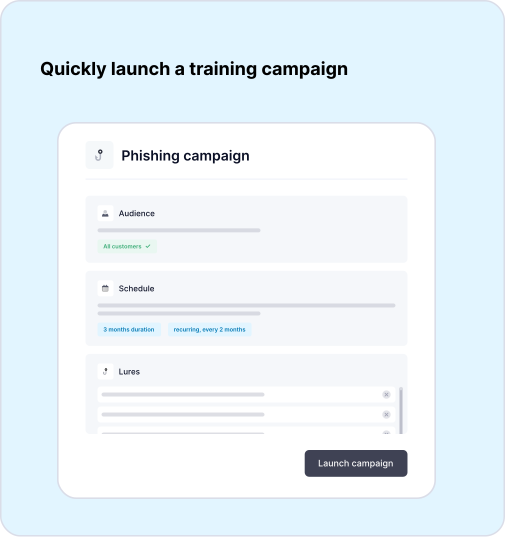
How to meet evolving compliance expectations.
Support Cyber Insurance and Compliance Requirements
Many cyber insurance providers and regulatory frameworks now expect organizations to implement security awareness training programs as part of their overall cybersecurity strategy. Demonstrating that employees are regularly tested and educated on phishing threats can help organizations strengthen their security posture and meet evolving compliance expectations.
Simulated phishing supports compliance initiatives, including:
- Cyber Essentials
- Cyber Essentials Plus
- ISO 27001
- NIST Cybersecurity Framework
- CIS Controls
- GDPR security awareness requirements
Regular phishing simulations provide documented evidence that security awareness training is active, measurable, and ongoing, something auditors, insurers, and regulators increasingly look for. By helping clients meet these obligations, MSPs become trusted cybersecurity advisors rather than solely IT service providers, while also helping clients reduce risk and improve their insurability.

Realistic, Up-to-Date Attack Scenarios
Deliver More Value with Effective Phishing Simulation
For MSPs, phishing simulation is more than a security awareness tool—it's an opportunity to deliver measurable cybersecurity outcomes while creating recurring revenue streams. Whether packaged as part of a managed security service, a compliance offering, a user awareness program, or a cyber insurance readiness assessment, phishing simulation helps MSPs deliver ongoing value that clients can see and measure.
However, not all phishing simulation programs are created equal. To effectively reduce human risk, training must be relevant, engaging, and aligned with today's evolving threat landscape.
Phishing Simulation training should mirror the tactics cybercriminals use today, including:
- Credential harvesting attacks
- Business Email Compromise (BEC)
- Microsoft 365 phishing campaigns
- QR-code phishing (Quishing)
- Smishing (SMS phishing)
- Executive and CEO impersonation attacks
- Behavior-Based Security Awareness
Rather than delivering generic annual training, modern platforms use behavioral insights to identify at-risk users and automatically assign additional training where needed. This personalized approach helps improve engagement, knowledge retention, and long-term security behavior.