Commvault has earned its place as a leading enterprise standard for data protection. For over two decades, it has been a platform that many Fortune 500 companies trust when they cannot afford to lose data. With its unified architecture spanning legacy systems to modern Kubernetes clusters, Cleanroom Recovery for ransomware incidents, and AI-powered threat detection, Commvault delivers industrial-strength resilience for the most complex hybrid environments.
But that power comes at a cost, and not just a financial one.
Commvault's comprehensive feature set requires significant expertise to manage. Users frequently describe needing dedicated administrators with significant expertise to handle its intricate Storage Policies, Deduplication Databases, and Workflow Automation. The platform's legacy architecture, while robust, can feel overwhelming for organizations without a dedicated backup engineering team. And its premium pricing model, often based on capacity or workload counts, can make budget planning challenging as data volumes grow.
That's where this guide comes in. Whether you're looking to:
- Get enterprise-grade cyber resilience without the operational complexity
- Find a solution purpose-built for MSPs managing multiple clients
- Protect virtualized environments with a VM-native approach
- Eliminate all backup infrastructure with a 100% SaaS solution
- Reduce costs with simpler, more affordable options
- Maintain open-source flexibility and avoid vendor lock-in
- Modernize with a SaaS-first platform for multi-cloud and SaaS workloads
We'll explore dedicated alternatives that excel in these specific areas.
Some organizations might use these tools to replace Commvault entirely when their needs don't justify its complexity. Others might find that Commvault remains right for their core data center while a simpler solution handles specific workloads. This isn't about finding a "better" solution; it's about finding the right fit for your specific requirements, budget, and team capabilities.
Let's dive into the Commvault alternatives and see which ones might be the perfect match for your data protection needs.
The Best Commvault Alternatives
|
|
Starts at: $3.74/user/month (Secure Bundle) G2 Score: 4.6 Capterra: N/A |
Best Alternative for MSPs Seeking Unified Security + Data Protection
|
|
|
Starts at: ~$57,000/year G2 Score: 4.6 Capterra Score: 4.8 |
Best Alternative for Large Enterprises Wanting Zero-Trust Data Security We chose Rubrik because its natively immutable architecture and rapid recovery capabilities deliver enterprise-grade ransomware resilience with a fundamentally simpler operational model than Commvault's legacy architecture. |
|
|
Starts at: Quote-based G2 Score: 4.6 Capterra Score: 4.8 |
Best Alternative for Virtualization-Centric Environments We chose Veeam because its VM-native architecture delivers faster backup and recovery for VMware, Hyper-V, and Nutanix environments, with deployment simplicity that Commvault's generalist approach cannot match. |
|
|
Starts at: Quote-based G2 Score: 4.7 Capterra Score: 4.7 |
Best Alternative for Zero-Infrastructure SaaS Backup We chose Druva because it delivers 100% SaaS backup with literally nothing to deploy, eliminating the infrastructure burden that makes Commvault resource-intensive to operate. |
|
|
Starts at: $1.95/workload/mo G2 Score: 4.7 Capterra Score: 4.8 |
Best Alternative for Affordable VM and M365 Backup We chose NAKIVO because it delivers enterprise-grade VM protection at a fraction of Commvault's cost, with deployment measured in minutes rather than weeks. |
|
|
Starts at: Free (Community) G2 Score: 4.7 Capterra Score: Not yet rated |
Best Alternative for Open-Source Flexibility and Cost Control We chose Bacula because its non-capacity-based licensing and open-source foundation eliminate the unpredictable costs that make Commvault prohibitive for growing data estates. |
|
|
Starts at: $1.20/user/mo G2 Score: 4.7 Capterra Score: 4.9 |
Best Alternative for Modern SaaS-First Multi-Cloud Protection We chose HYCU because its purpose-built SaaS architecture and 90+ workload integrations deliver modern data protection without the legacy complexity that defines Commvault. |




What is Commvault?
Commvault is a publicly traded enterprise data protection company that has been a market leader for over 14 consecutive years in Gartner evaluations.
Originally spun out of Bell Labs in 1996, it has evolved from a backup-focused vendor into what it now calls a "Cyber Resilience" platform, designed to protect, secure, and recover data across the most complex enterprise environments.
Its key features include:
- Backup & Recovery with unified protection for on-premises, hybrid, and multi-cloud environments, supporting everything from legacy systems and IBM i to Kubernetes containers
- Cleanroom Recovery for spinning up isolated cloud environments to safely recover from ransomware and conduct forensic analysis
- Cloud Rewind (from the Appranix acquisition) to capture and restore entire application environments, not just data
- Threatwise cyber deception technology that deploys decoys to detect attackers before they reach production data
- Air Gap Protect for fully managed, immutable cloud storage with network isolation
- Metallic AI (Arlie) for AI-driven anomaly detection, natural language queries, and automated code generation
- Compliance & Governance with sensitive data discovery, eDiscovery, and automated data deletion
When a backup runs in Commvault, it leverages an advanced architecture of CommServe management servers, MediaAgents for data movement, and global deduplication databases to efficiently protect data across hundreds of workload types.
The platform's IntelliSnap technology orchestrates hardware snapshots for near-instant recovery, while its extensive policy engine allows granular control over every aspect of data protection.
For Fortune 500 companies managing petabytes across global data centers, multiple clouds, and thousands of SaaS users, Commvault delivers extensive breadth and depth. But that power requires substantial investment in licensing, infrastructure, training, and ongoing administration.
That's why we've focused on alternatives that deliver targeted value for organizations whose needs, budgets, or team capabilities don't align with Commvault's enterprise-centric model.
Looking for enterprise-grade data protection without the complexity? CyberSentriq combines cybersecurity and backup in one MSP-focused platform. Learn how we can simplify your data protection strategy.
How We Curated Our List of Commvault Alternatives
After researching Commvault extensively and analyzing the broader data protection market, we identified specific scenarios where organizations consistently seek alternatives. While Commvault excels at comprehensive enterprise data management, businesses often need solutions that better match their:
- Operational capacity: Teams without dedicated backup specialists who need simpler tools
- Budget constraints: Organizations that can't justify Commvault's premium pricing
- Specific workloads: Environments heavily focused on virtualization, SaaS, or endpoints
- MSP requirements: Service providers who need multi-tenant management and predictable economics
- Infrastructure philosophy: Companies committed to SaaS-first or open-source approaches
Each alternative on this list represents a strong contender in addressing one or more of these specific needs. Some excel at simplicity, others at cost-effectiveness, and others at specialized workload protection.
|
❗DISCLAIMER: We aren't covering every data protection tool on the market. Our focus is on highlighting the best alternatives that address Commvault's key limitations for specific use cases and organizational profiles. |
1. CyberSentriq: Best Alternative for MSPs Seeking Unified Security + Data Protection
CyberSentriq is an integrated cybersecurity and data protection platform that empowers MSPs to deliver AI threat defense, advanced email security, and resilient data protection to SMBs worldwide.
Formed in June 2025 through the combination of TitanHQ's cybersecurity suite with Redstor's cloud-native data protection, CyberSentriq creates one of the few solutions that unifies email security, web filtering, security awareness training, and enterprise backup in a single MSP-focused offering.
With nearly 30 years of pedigree in email security and partnerships with over 3,000 MSPs serving approximately 150,000 SMBs globally, the platform brings proven expertise to modern data protection challenges. Its key features include:
- Streaming and Instant Recovery for near-zero RTO, streaming files and systems on-demand during recovery rather than waiting for full restores
- AI-Powered Malware Detection that scans backups before recovery, quarantining threats to ensure clean restores
- Multi-Tenant Console providing centralized management across all clients from a single dashboard
- SpamTitan Email Security with 99.99% spam catch rate, dual antivirus engines, and sandboxing
- WebTitan DNS Filtering for AI-driven web security and content control
- SafeTitan Security Awareness Training with behavior-driven phishing simulations
- Microsoft 365 and Entra ID Backup for comprehensive SaaS protection, including identity infrastructure
- Cloud-Native, Appliance-Free Architecture requiring no on-premises backup infrastructure
For MSPs and IT service providers managing multiple clients, CyberSentriq addresses the fragmentation problem that plagues the industry: juggling separate vendors for backup, email security, web filtering, and user training.
By combining these capabilities in one platform with unified billing and management, it streamlines how service providers deliver comprehensive protection.
Why Choose CyberSentriq Over Commvault for MSP-Focused Data Protection
While Commvault delivers extensive capability for large enterprises with dedicated backup teams, CyberSentriq takes a fundamentally different approach designed specifically for the MSP channel and the SMBs they serve.
Operating with an MSP First model that emphasizes one contract, one support path, one roadmap, and one dedicated Account Manager, CyberSentriq makes it exceptionally easy for service providers to work with them.
Unified Security + Backup: One Platform Instead of a Fragmented Stack
The most significant differentiator is CyberSentriq's integration of cybersecurity with data protection. Commvault primarily focuses on backup, recovery, and data management, though it has added some threat detection capabilities in recent releases.
CyberSentriq takes a broader approach. From a single console, MSPs can:
- Protect client data with cloud-native backup across servers, endpoints, and SaaS apps (including M365 and Entra ID)
- Block email-borne threats with SpamTitan's multi-layered filtering
- Prevent web-based attacks with WebTitan's DNS security
- Train users to recognize phishing with SafeTitan's automated campaigns
- Archive emails for compliance with ArcTitan
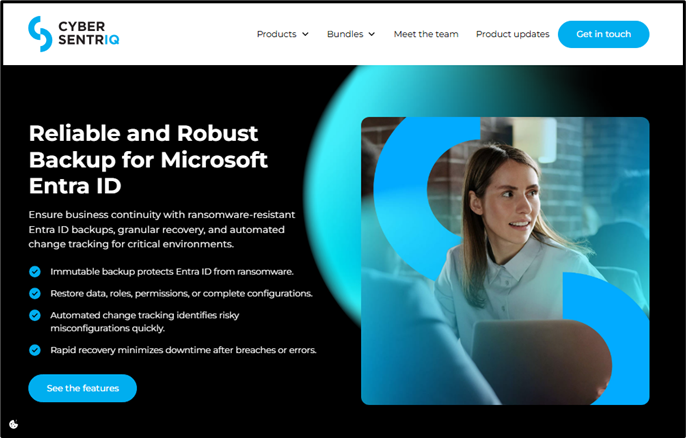
This integration matters because approximately 90-94% of cyberattacks begin with email, and 95% of breaches involve human error. CyberSentriq addresses more of the attack chain, from prevention through recovery, while Commvault focuses primarily on the recovery and threat detection aspects.
⚡ CyberSentriq in Action: When a phishing email slips through a client's native M365 filters, SpamTitan catches it before delivery. If an employee clicks a malicious link, WebTitan blocks access to the payload site. SafeTitan identifies the at-risk user and automatically enrolls them in targeted training. And if ransomware somehow executes, streaming recovery brings clean data back within minutes, not hours. One platform, comprehensive protection.
Operational Simplicity: Minutes to Deploy, Not Months
Commvault's architecture requires deploying CommServe management servers, MediaAgents for data movement, and configuring complex Storage Policies and Deduplication Databases. Deployments often span weeks or months depending on environment complexity.
CyberSentriq takes the opposite approach with its cloud-native, appliance-free architecture:
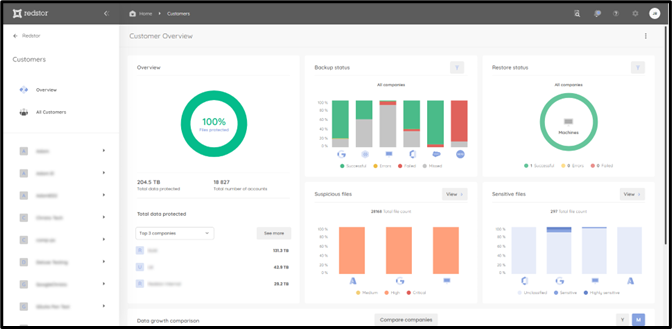
- Deployment: Protecting a new client takes under 30 minutes with clean, simple UX
- Management: The console is designed for IT generalists, not backup specialists
- Maintenance: Fully managed SaaS means no patching, upgrading, or capacity planning
- Learning Curve: Wizard-driven workflows with sensible defaults versus Commvault's many granular settings
Source: Redstor
For MSPs managing dozens or hundreds of clients, this operational efficiency directly impacts profitability. Time saved on backup administration can be redirected to higher-value services.
⚡ CyberSentriq in Action: A new MSP client signs up Monday morning. By lunch, their servers are backing up to the cloud, email security is filtering threats, web filtering is blocking malicious sites, and their first phishing simulation is scheduled. With traditional Commvault deployments, the same scope would require infrastructure procurement, deployment planning, and potentially weeks of configuration (though Commvault's Metallic SaaS offering can reduce this timeline).
Predictable Economics: Transparent Pricing Without Surprises
Commvault's pricing model, based on Front-End Terabytes or workload counts, can create budget challenges.
As data volumes grow (which they always do), licensing costs escalate. Add infrastructure costs for CommServe and MediaAgents, and total cost of ownership becomes difficult to forecast.
CyberSentriq offers transparent, per-user pricing starting at $3.74/user/month for the Secure Bundle. There are no hidden egress fees, no capacity-based licensing surprises, and no hardware to depreciate. MSPs can predict their costs precisely and build profitable service offerings with clear margins.
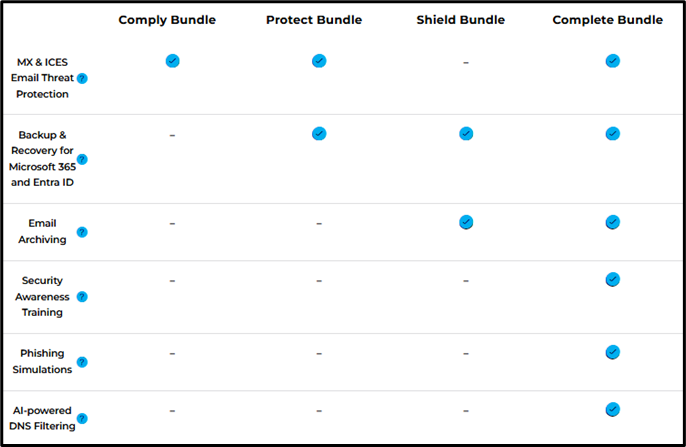
The platform also offers tiered pricing models (Silver, Gold, Platinum, Top Tier) that enable MSPs to increase their margins as they grow, along with highly customizable bundles:
- Secure Bundle: MX and ICES email threat protection
- Protect Bundle: Adds M365 and Entra ID backup
- Comply Bundle: Email archiving plus backup
- Complete Bundle: Full security, backup, training, and archiving
Rapid Recovery: Streaming Recovery vs. Traditional Restore
When disaster strikes, recovery speed determines business impact. Commvault offers advanced recovery options, including Live Mount capabilities for some workloads, though many traditional restores still require data transfer before systems come online.
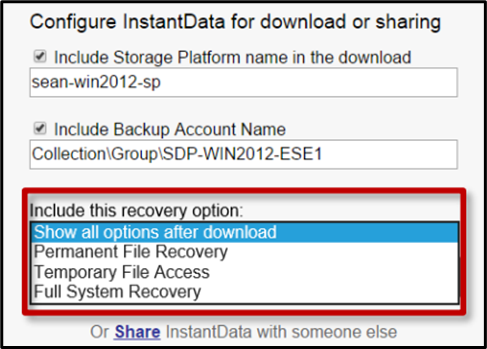
CyberSentriq's streaming and instant recovery methods fundamentally change this equation. Instead of waiting for gigabytes or terabytes to download, users can stream data on-demand. Critical files become accessible in minutes while the full restore completes in the background.
This approach reduces the wait that defines traditional recovery scenarios, where IT teams watch progress bars while the business sits idle.
Source: RedStor
MSP Partnership Model: A True Partnership, Not Just a Vendor Relationship
Beyond technology, CyberSentriq differentiates through its MSP First partnership approach. Partners receive:
- A dedicated Account Manager as a single point of contact for all strategy, pricing, and commercial conversations
- Onboarding and migration assistance with Sales Engineering support
- Co-selling and enablement through joint discovery calls and demo support
- Quarterly account reviews with data-driven insights and early roadmap access
Perhaps most importantly, CyberSentriq maintains the personal relationship that MSPs value, where somebody actually picks up the phone when they call. This level of accessibility and personal touch is something many vendors of similar size simply don't provide.
�� NOTE: We also evaluated other MSP-focused backup solutions like Datto and Acronis. While both offer strong MSP programs with some integrated security features, CyberSentriq's approach of combining a full security suite with backup technology offers a more comprehensive unified solution for service providers who need complete protection from one source.
CyberSentriq Pricing
CyberSentriq uses a per-user, per-month subscription model billed annually, with a minimum of 25 users for select products.
All products can be purchased individually or as bundles for additional savings. Tiered pricing models (Silver, Gold, Platinum, Top Tier) are available to help MSPs increase margins as their business grows.
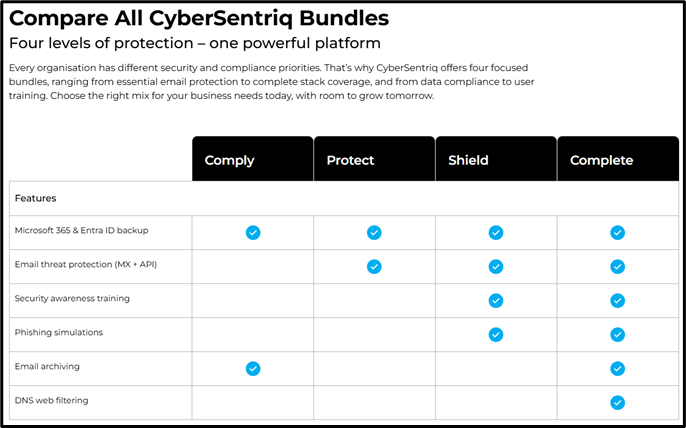
Product Bundles:
- Secure Bundle: MX and ICES email threat protection
- Protect Bundle: Secure Bundle plus M365 and Entra ID backup
- Comply Bundle: Email archiving plus M365 backup
- Complete Bundle: Email protection, backup, security awareness training, DNS filtering, and email archiving
Individual Products:
- SpamTitan (Email Security)
- WebTitan (DNS Filtering)
- SafeTitan (Security Awareness)
- ArcTitan (Email Archiving)
- PhishTitan (Anti-Phishing)
Who Should Use CyberSentriq?
Choose CyberSentriq if:
- You're an MSP or IT service provider managing multiple clients who need unified security and backup from a single platform with multi-tenant management, eliminating the complexity of juggling separate vendors for email security, web filtering, backup, and user training
- You need predictable, transparent pricing that allows you to build profitable service offerings without worrying about capacity-based licensing escalations or hidden infrastructure costs
- Your team lacks dedicated backup specialists and needs a solution that IT generalists can deploy in under 30 minutes and manage without extensive training or ongoing professional services
- You want to address more of the attack chain from prevention (email and web security) through detection (security awareness training) to recovery (cloud backup), rather than focusing primarily on recovery
- You value a true partnership with a vendor that provides dedicated account management, responsive support, and a personal relationship
Ready to simplify your security and backup stack? CyberSentriq combines everything MSPs need in one platform. Schedule a demo to see how unified protection works.
2. Rubrik Security Cloud — Best Alternative for Large Enterprises Wanting Zero-Trust Data Security
Rubrik Security Cloud is a comprehensive data security platform built on Zero Trust principles, combining data protection, threat analytics, and cyber recovery into a unified SaaS offering.
Founded in 2014, Rubrik was architecturally designed with security as a core focus from the start. Its key capabilities include:
- Natively Immutable File System using append-only architecture that prevents ransomware from altering or deleting backups
- Instant Recovery Capabilities for rapid VM recovery, booting VMs directly from backup storage
- AI-Powered Threat Hunting capable of scanning 75,000 backups in under 60 seconds
- Unified Hybrid and Multi-Cloud Protection from a single platform
- Orchestrated Application Recovery with Blueprint automation for complex multi-tier applications
Why Choose Rubrik Security Cloud Over Commvault
Rubrik differentiates from Commvault across three critical dimensions:
1. Architectural Simplicity Under Pressure
While Commvault requires specialized expertise to manage its CommServe, MediaAgents, and complex storage policies, Rubrik consolidates these functions into a unified fabric with policy-driven "SLA Domains."
During a ransomware incident when every minute costs money, the difference between navigating Commvault's feature-rich interface versus Rubrik's guided recovery wizards becomes operationally significant.
2. Security by Design vs. Retrofitted Security
Commvault's cyber resilience capabilities represent advanced additions built atop a platform originally designed for data protection.
Rubrik was purpose-built post-CryptoLocker with Zero Trust embedded in its core. Every byte written to Rubrik is append-only by design; there's no code path that permits in-place modification of backup data.
3. Recovery Speed Through Instant Recovery
Rubrik's Live Mount can bring databases online for queries in minutes while full restoration completes in the background, compared to traditional full-restore workflows that require complete data transfer.
Combined with Turbo Threat Hunting that identifies clean recovery points across 75,000 backups in under 60 seconds, Rubrik compounds speed advantages at every step.
�� NOTE: We also evaluated Veritas NetBackup and Dell PowerProtect. While Veritas offers deep legacy support and Dell provides tight hardware integration, Rubrik delivers a comprehensive zero-trust architecture for enterprises prioritizing ransomware resilience over legacy workload support.
Rubrik Security Cloud Pricing
Rubrik operates on subscription-based licensing with annual costs typically ranging from $57,000 to $160,000+ depending on scale.
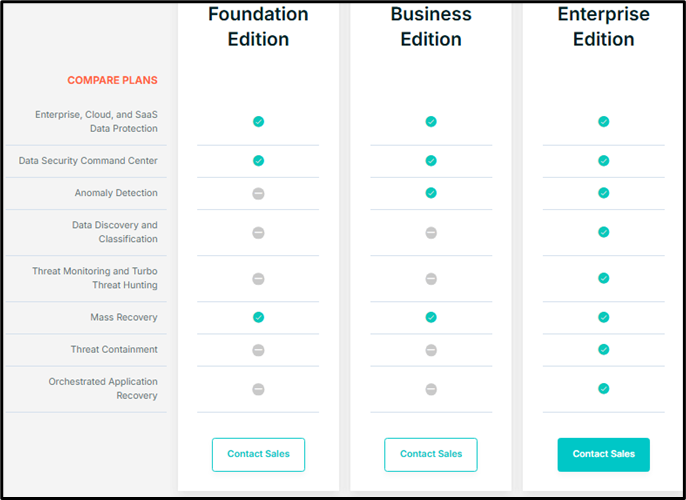
Three editions are available: Foundation (core protection), Business (adds ransomware monitoring and anomaly detection), and Enterprise (full cyber recovery with orchestration and threat hunting). Subscriptions are commonly offered in 3-year terms, with 5-year options available.
Source: Rubrik
Who Should Use Rubrik Security Cloud?
Choose Rubrik if:
- You operate in heavily regulated industries (financial services, healthcare, government) requiring demonstrable immutable backups and audit-ready compliance
- Recovery time objectives are measured in minutes and your business cannot tolerate the extended downtime of traditional restore workflows
- Your security posture prioritizes architectural immutability over configuration-based protection, assuming sophisticated adversaries targeting backup infrastructure
3. Veeam Data Platform — Best Alternative for Virtualization-Centric Environments
Veeam Data Platform is a comprehensive data protection solution that originated as a virtualization-first backup platform.
Founded in 2006, Veeam was an early innovator in image-based VM backup for VMware environments and now serves over 550,000 customers worldwide, including 82% of the Fortune 500. Its key capabilities include:
- Instant VM Recovery that boots failed VMs directly from compressed backup files in under 15 minutes
- Continuous Data Protection (CDP) with near-zero RPO for mission-critical workloads (specifically for CDP-enabled workloads)
- Native Hypervisor Integration for VMware vSphere, Hyper-V, Nutanix AHV, and Proxmox
- SureBackup for automated recovery verification in isolated environments
- Veeam Universal License (VUL) with portable licensing across workload types
Why Choose Veeam Data Platform Over Commvault
Veeam's advantages center on virtualization depth and operational improvements over Commvault's approach:
1. Virtualization-First Architecture
While Commvault treats VMs as one of many workload types within its broader framework, Veeam was purpose-built from the ground up for virtual machine protection.
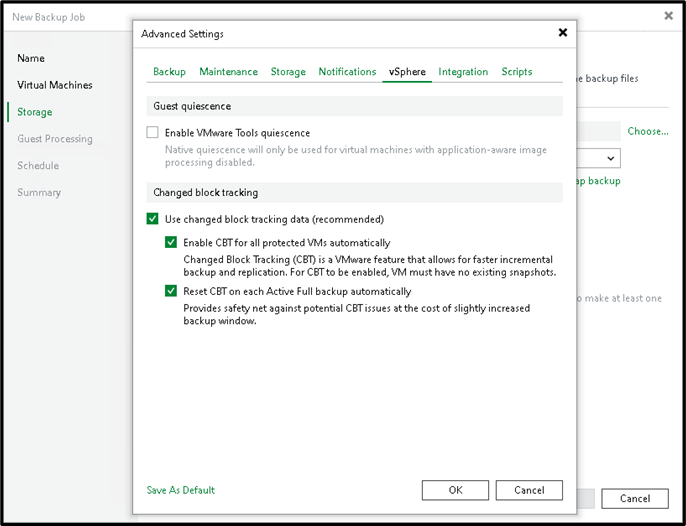
It leverages hypervisor-level APIs like VMware's Changed Block Tracking and vSphere APIs for I/O Filtering to achieve snapshot-free, real-time data capture with near-zero RPOs for CDP-enabled workloads.
Source: Veeam
2. Faster Initial Deployment
Where traditional Commvault deployments often require weeks of planning and professional services, Veeam can typically be production-ready more quickly. User feedback notes that Veeam's interface is more intuitive than Commvault's for teams focused primarily on virtualization workloads.
3. Instant VM Recovery Technology
Veeam pioneered Instant VM Recovery in 2010, and this technological head start has resulted in mature performance for VM-specific recovery scenarios.
Important Considerations for MSPs and Growing Organizations
While Veeam offers strong capabilities for virtualization-centric environments, organizations should be aware of some operational factors:
- Deployment and Maintenance Complexity: For MSPs and internal IT teams managing multiple environments, Veeam can still require significant expertise to deploy and maintain effectively across diverse client estates
- Infrastructure Dependencies: Veeam traditionally relies on on-premises hardware components, which may not align with organizations looking to eliminate appliance dependencies entirely
- Licensing at Scale: As data estates grow, Veeam's licensing model can become unpredictable or expensive, requiring careful capacity planning
- Recovery Performance Variability: While Instant VM Recovery is powerful, some organizations report that restore processes during critical incidents can be slower or more cumbersome than expected, depending on the specific scenario
- Upgrade Considerations: Major version upgrades may introduce downtime or require careful planning to minimize risk
- Hybrid and SaaS Protection: Organizations needing unified protection across hybrid environments and SaaS workloads may find they need to manage multiple product components rather than a single elegant solution
�� NOTE: We also evaluated Unitrends and Zmanda for VM-centric backup. While both offer capable solutions, Veeam delivers the most mature VM-native architecture for organizations whose primary focus is virtualization. However, MSPs seeking simpler cloud-native solutions with unified security may find alternatives like CyberSentriq better suited to their operational model.
Veeam Data Platform Pricing
Veeam uses subscription-based Universal Licensing metered per workload.
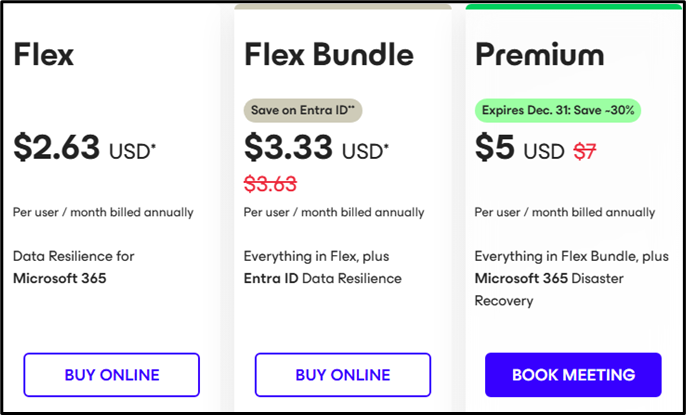
Three editions are available: Foundation (core backup), Advanced (adds AI malware detection and SIEM integration), and Premium (full DR orchestration). Microsoft 365 backup is licensed separately starting at approximately $2.63 per user for Flex plans, up to $7 per user for Premium tiers.
Source: Veeam
Who Should Use Veeam Data Platform?
Choose Veeam if:
- Your infrastructure is primarily VMware, Hyper-V, or Nutanix and you need solutions optimized for native hypervisor APIs
- You have dedicated IT staff with the expertise to manage and maintain the platform effectively
- Your organization is comfortable with on-premises infrastructure and doesn't prioritize an appliance-free, cloud-native approach
- You require instant recovery for VM-specific workloads and your team has the expertise to leverage Veeam's advanced capabilities
4. Druva Data Security Cloud — Best Alternative for Zero-Infrastructure SaaS Backup
Druva Data Security Cloud is a fully cloud-native SaaS platform that eliminates all on-premises infrastructure requirements.
Built primarily on AWS (with recent Azure integration), it delivers backup, recovery, and security without deploying management servers or storage arrays, with agentless protection for many cloud workloads (some enterprise workloads may still require agents). Its key capabilities include:
- 100% SaaS Architecture with zero infrastructure footprint
- Global Source-Side Deduplication reducing storage and bandwidth by analyzing data across all workloads
- Deep SaaS and Endpoint Protection for M365, Google Workspace, Salesforce, and devices
- Curated Recovery that automatically assembles the last clean version of every file from multiple snapshots
- $10 Million Data Resiliency Guarantee covering security, immutability, and availability
Why Choose Druva Data Security Cloud Over Commvault
Druva's differentiation is architectural rather than feature-based:
1. True SaaS Eliminating Infrastructure Management
Commvault's traditional architecture relies on customer-deployed CommServe servers and MediaAgents, though its Metallic SaaS offering provides a more managed alternative. With Druva, there is literally nothing to deploy, patch, or scale. Customers log into a web console and begin protecting workloads within 15 minutes.
2. Predictable Consumption-Based Economics
Druva's per-gigabyte or per-user pricing includes everything: storage, compute, and egress. Infrastructure scaling costs are minimized when backup windows grow or new workloads come online.
3. Endpoint and SaaS as First-Class Citizens
While Commvault evolved from data center roots and later expanded to include endpoints and SaaS protection, Druva was built for the modern distributed enterprise where critical data lives on employee laptops and in cloud applications.
�� NOTE: We also considered NinjaOne and IDrive 360 for lightweight cloud backup. While both offer cost-effective options, Druva provides a mature enterprise-grade combination of zero-infrastructure delivery and advanced cyber resilience features.
Druva Data Security Cloud Pricing
Druva structures pricing by data type: enterprise workloads by post-deduplication gigabytes, public cloud by protected resource, and productivity data (M365, endpoints) by user. Enterprise and Elite tiers offer different feature sets. Contact sales for quotes.
Who Should Use Druva Data Security Cloud?
Choose Druva if:
- Your organization has mandated zero on-premises backup infrastructure as part of cloud-first initiatives or data center consolidation
- Your IT team is lean and cannot dedicate staff to becoming backup infrastructure specialists
- You have a distributed workforce with critical data on employee endpoints requiring unified protection and governance
5. NAKIVO Backup & Replication — Best Alternative for Affordable VM and M365 Backup
NAKIVO Backup & Replication is particularly well-suited for small to medium-sized businesses needing enterprise-grade backup without enterprise complexity or cost.
Serving over 30,000 organizations across 183 countries, NAKIVO focuses on making virtualized environment protection fast, reliable, and genuinely affordable. Its key capabilities include:
- Flash VM Boot for booting VMs directly from compressed backups in seconds
- Real-Time Replication with RPOs as low as one second for VMware
- Flexible Deployment on Windows, Linux, NAS devices, or as virtual appliances
- Perpetual and Subscription Licensing options with transparent per-workload pricing
- Sub-Hour Deployment with wizard-driven configuration
Why Choose NAKIVO Over Commvault
NAKIVO competes on fundamentally different economics and operational simplicity:
1. Lower Total Cost of Ownership
Customer testimonials frequently report significant cost savings compared to enterprise alternatives.
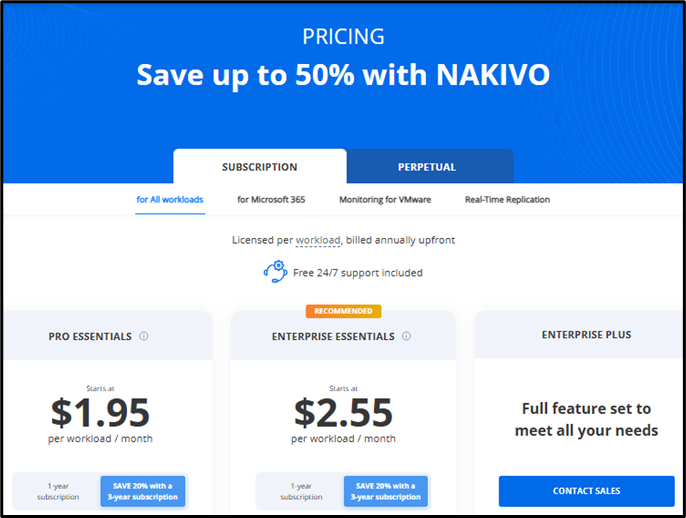
NAKIVO's pricing starts at $1.95/workload/month for subscriptions, with M365 backup available from $0.80/user/month. The ability to install on existing NAS devices from QNAP, Synology, or Western Digital transforms existing hardware into backup appliances without dedicated infrastructure.
2. Sub-Hour Deployment Without Training
Where traditional Commvault deployments often span weeks with professional services, NAKIVO users can be protecting environments in under an hour. The interface is praised as "modern, simple, and fast" with a wizard-driven setup that works for users "with limited experience in data protection."
3. Virtualization-Optimized Performance
NAKIVO leverages native change tracking technologies (VMware CBT, Hyper-V RCT, Nutanix CRT) for efficient incremental backups, with LAN-free data transfer for storage-direct backup and network acceleration for optimized throughput.
�� NOTE: We also evaluated Zmanda Pro and Arcserve UDP. While Zmanda offers open-source flexibility and Arcserve provides legacy compatibility, NAKIVO delivers the best balance of modern virtualization integration, ease of use, and cost-effectiveness for SMB scenarios.
NAKIVO Backup & Replication Pricing
NAKIVO offers perpetual licensing (one-time fee plus annual support) and subscription licensing (annual recurring).
Perpetual licenses use per-socket pricing for VMs, while subscription licenses use per-VM pricing. Per-machine pricing applies for physical servers, and per-database pricing for Oracle. Pro Essentials, Enterprise Essentials, and Enterprise Plus editions offer progressively more features. A free 15-day trial and Free Edition for up to 10 workloads are available.
Source: Nakivo
Who Should Use NAKIVO?
Choose NAKIVO if:
- You're a small to mid-sized business needing enterprise-grade VM protection without Commvault's complexity or cost
- You want rapid deployment where IT generalists can configure backups themselves without certifications or professional services
- You value transparent pricing with mostly workload-based licensing (note: NAS backup uses capacity-based licensing)
6. Bacula Enterprise — Best Alternative for Open-Source Flexibility and Cost Control
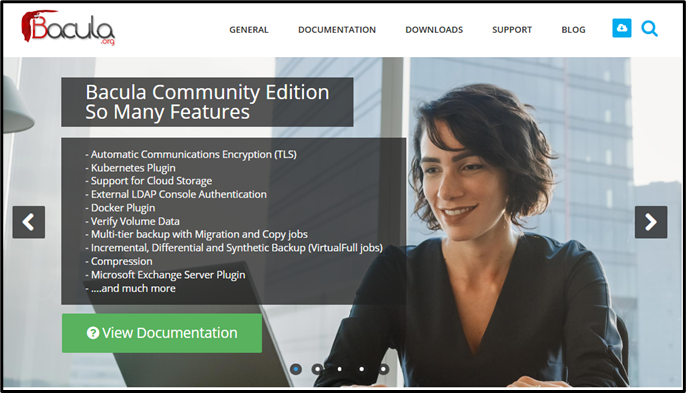
Bacula is a comprehensive open-source backup platform offering organizations the rare combination of enterprise capabilities with reduced vendor lock-in concerns.
With a dual-licensing model (free Community edition under AGPLv3 and commercial Enterprise edition), it supports 34+ operating systems including legacy Unix variants that most vendors have abandoned. Its key capabilities include:
- Non-Capacity-Based Subscription Pricing based solely on agent count, not data volume
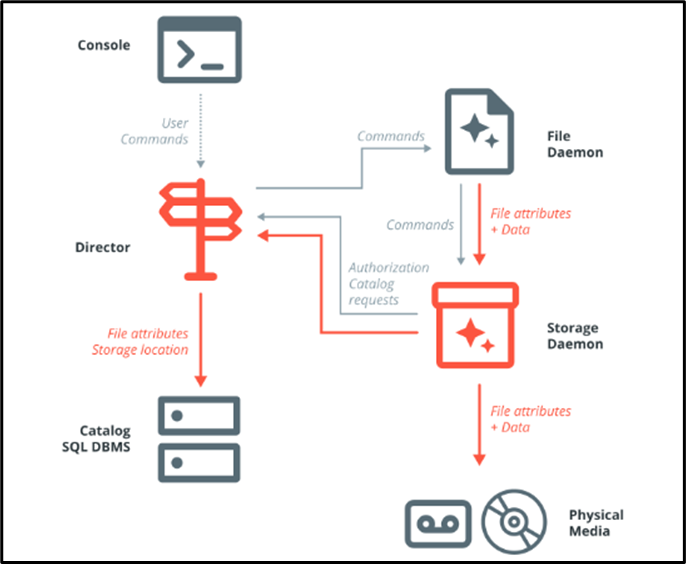
- Modular Client-Server Architecture for distributed, highly customizable deployments
- Global Endpoint Deduplication and advanced storage management
- 34+ Operating System Support including AIX, HP-UX, Solaris, and legacy Unix
- Open-Source Core providing code transparency and flexibility
Why Choose Bacula Over Commvault
Bacula competes on economic predictability and architectural philosophy:
1. Non-Capacity-Based Licensing
While Commvault typically licenses by Front-End Terabytes, Bacula Enterprise bases subscriptions solely on agent count regardless of data volume. Organizations experiencing rapid data growth can scale without punitive license renegotiations. Tiers range from Small Business (20 agents) to Platinum (5,000 agents).
2. Open-Source Transparency
Bacula's AGPLv3 Community edition provides complete code transparency for organizations requiring audit capability (critical for government and defense). Unlike Commvault's proprietary formats, Bacula's open architecture significantly reduces vendor lock-in concerns.
3. Modular Architecture for Technical Teams
Bacula explicitly embraces granular configurability for backup administrators who want complete control. While Commvault has simplified through Command Center, Bacula offers extensive directives for precise tuning, making it ideal for High-Performance Computing and specialized environments.
Source: Bacula
�� NOTE: We considered other open-source and freemium alternatives, but Bacula's combination of actively developed open-source core (since 2000) with commercially supported Enterprise edition makes it the most credible "free-first" alternative to Commvault.
Bacula Pricing
Community Edition: Free under AGPLv3, no hard license limits, community support only.
Enterprise Edition: Annual subscription by agent count:
- Small Business (20 agents) through Platinum (5,000 agents)
- Includes certified binaries, unlimited support incidents, and updates
- BWeb Management Suite included at select tiers
- Support response times improve with tier level
Who Should Use Bacula?
Choose Bacula if:
- Your organization values open-source transparency and needs to audit or extend backup software for security or compliance requirements
- Your IT team includes skilled backup specialists who view granular control as an advantage and prefer command-line mastery
- You're experiencing cost escalation with capacity-based licensing and need predictable economics as data volumes grow
7. HYCU R-Cloud — Best Alternative for Modern SaaS-First Multi-Cloud Protection
HYCU R-Cloud is a comprehensive Data Protection as a Service platform unveiled in February 2023 after four years of development.
Purpose-built as a true SaaS-first solution, it eliminates infrastructure management while supporting over 90 workloads across SaaS, IaaS, and PaaS environments through a unique low-code integration platform. Its key capabilities include:
- SaaS-First Architecture with zero infrastructure to deploy or manage
- 90+ Workload Support with rapid integration development
- R-Graph Visualization for discovering and mapping entire data estates
- 100% Data Sovereignty where customer data stays in customer-controlled storage
- Low-Code Integration Platform allowing SaaS vendors to build their own connectors in days
Why Choose HYCU R-Cloud Over Commvault
HYCU represents a generational shift in data protection philosophy:
1. True SaaS Eliminating Operational Burden
While Commvault offers both traditional deployments requiring customer-managed infrastructure and SaaS options, HYCU is delivered as pure SaaS. An industry-leading NPS of 91 reflects user satisfaction with its streamlined approach.
2. Dramatic Simplification
Commvault's Command Center, despite modernization efforts, still offers extensive enterprise capabilities. HYCU offers "one-click simplicity" with predefined policies (Gold, Silver, Bronze) that can be applied without understanding intricate policy hierarchies.
3. Purpose-Built SaaS Application Protection
HYCU's low-code platform allows SaaS vendors to build their own backup integrations in days, not months. This marketplace-driven approach allows HYCU to expand protection to new applications faster than traditional vendor-centric integration models.
�� NOTE: We also evaluated Clumio and Keepit for SaaS-first backup. While both offer strong capabilities, HYCU provides a strong combination of multi-cloud support, extensive workload coverage, and innovative marketplace ecosystem.
HYCU R-Cloud Pricing
Hybrid and cloud infrastructure pricing uses three tiers (Backup & Recovery, Enterprise Resilience, Unified Resilience) with self-service and quote-based options depending on tier.
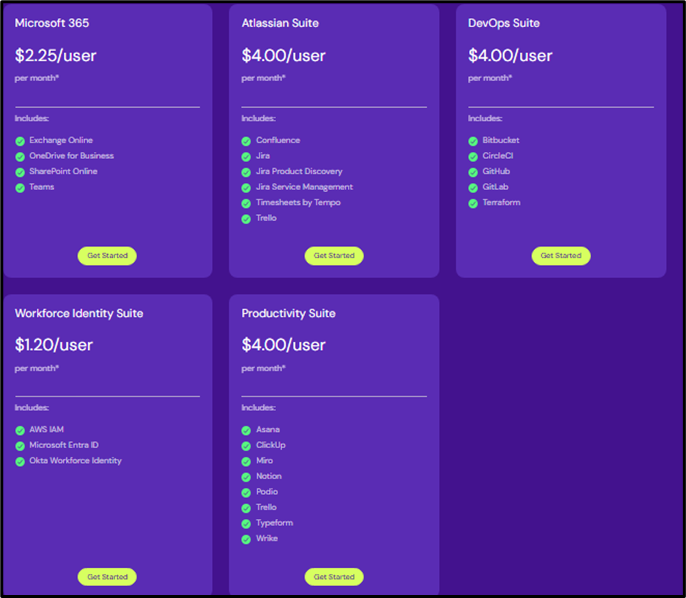
SaaS applications are priced per user monthly: Workforce Identity from $1.20/user, Microsoft 365 from $2.25/user, Atlassian Suite from $4.00/user. Enterprise applications (Salesforce, Google Workspace) are priced on request.
Source: HYCU
Who Should Use HYCU R-Cloud?
Choose HYCU if:
- You're experiencing "backup fatigue" from managing multiple tools for on-premises, cloud, and SaaS protection
- You need extensive workload coverage including a growing list of business applications
- You want true SaaS delivery without infrastructure management and value modern, intuitive user experience
The Final Verdict
While Commvault remains a leading choice for organizations with complex hybrid environments and dedicated backup teams, growing businesses and MSPs often need solutions that better match their specific requirements, budgets, and operational capabilities. Based on our research, here are the best alternatives:
- CyberSentriq for MSPs seeking an integrated cybersecurity and data protection platform that empowers them to deliver AI threat defense, advanced email security, and resilient data protection to SMBs, all with an MSP First model, transparent pricing, and deployment in under 30 minutes
- Rubrik Security Cloud for large enterprises requiring zero-trust architecture and rapid ransomware recovery
- Veeam Data Platform for virtualization-centric environments with dedicated IT staff needing VM-native protection with instant recovery
- Druva Data Security Cloud for organizations committed to zero-infrastructure SaaS backup
- NAKIVO Backup & Replication for SMBs wanting enterprise-grade VM protection at competitive pricing
- Bacula Enterprise for technical teams valuing open-source flexibility and predictable, non-capacity-based pricing
- HYCU R-Cloud for modern organizations prioritizing SaaS-first architecture and broad workload coverage
Remember, the right choice depends on your specific environment, team capabilities, and growth trajectory.
Many organizations successfully use multiple solutions: perhaps Commvault for their core data center while a simpler solution handles SaaS applications or remote offices. Consider your actual requirements rather than feature checklists when making your decision.
Looking for enterprise-grade protection without enterprise complexity? CyberSentriq combines cybersecurity and backup in one MSP-focused platform, with transparent pricing and deployment measured in minutes. Schedule a demo to see how unified protection works.