

The recovery gaps that cost MSPs time, revenue, and customer confidence.
Common MSP Backup Recovery Mistakes
-
Never Testing Full Restores
Successful backups do not guarantee successful recovery. Full restore testing remains one of the most overlooked areas of backup management and is often only addressed after an outage occurs.
-
Weak Endpoint Visibility
Unmanaged or poorly monitored endpoints create significant security and compliance risks. Without visibility, MSPs cannot reliably confirm backup health, ransomware exposure, or recovery readiness.
-
Overcomplicated Backup Architectures
Using too many backup tools increases operational overhead, alert fatigue, recovery complexity, and internal training requirements. Simpler, standardized environments are typically easier to secure and recover.
-
Ignoring Identity Dependencies
Recovery often depends on identity infrastructure such as Active Directory, Entra ID, and authentication services. If identity systems are unavailable, restoring broader services becomes significantly harder. Identity recovery should therefore be prioritized early in incident response planning.
Standardizing endpoint protection and recovery
Endpoint Backup Recovery Strategies for MSPs
Remote endpoints require continuous protection with ransomware detection, versioning, and automated recovery. Standardized policies and centralized monitoring help MSPs simplify management, identify risks early, and ensure recovery readiness.
Bare Metal Recovery for Windows Servers
Bare metal recovery enables MSPs to rapidly restore complete systems following catastrophic failure. This capability is particularly valuable during ransomware incidents, hardware failures, operating system corruption, or failed patch deployments.
To improve recovery readiness, MSPs should:
- Maintain bootable recovery media
- Validate recovery compatibility regularly
- Test hardware-independent recovery processes
- Document recovery procedures clearly
Fast, reliable bare metal recovery helps MSPs minimize downtime and maintain customer confidence during high-pressure incidents.

Windows Server Backup Recovery Best Practices
Implement the 3-2-1 Backup Rule
The 3-2-1 backup rule says that every environment should maintain: Three copies of data Two different storage types One immutable or off-site backup copy This approach improves resilience and reduces the likelihood of complete data loss during ransomware or infrastructure failures.
Use Immutable Backup Storage
Immutable storage has become essential for ransomware recovery. MSPs should prioritize technologies such as object lock storage, air-gapped repositories, and restricted backup access controls to prevent backup tampering.
Conduct Regular Recovery Testing
A backup is only valuable if recovery works when needed. MSPs should regularly validate: Bare metal recovery Active Directory restoration Hyper-V recovery File-level restoration Application consistency Frequent testing improves recovery confidence while helping teams identify operational gaps before an incident occurs.
Prioritize Critical Workloads
Recovery order matters during major outages or ransomware events. Domain controllers and identity services should typically be restored first, followed by file servers and core business systems. User endpoints and archive systems can then follow based on operational priority. Clear recovery prioritization helps MSPs reduce downtime and restore customer operations faster.

Fast Recovery. No Disruption
Backups completed every day. Powering automated backups at scale, trusted where downtime isn’t an option.
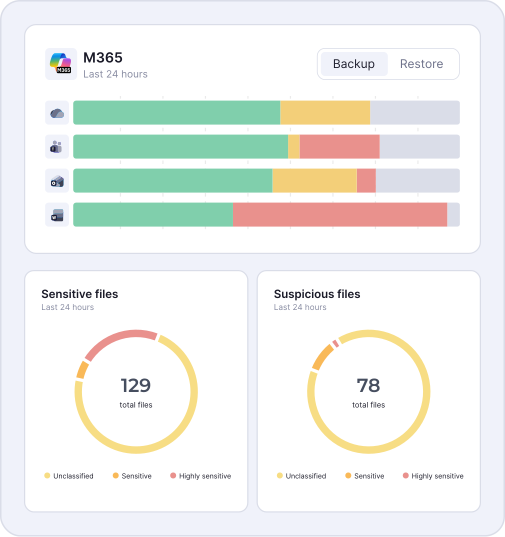
Microsoft recycle bins retain data for 93 days; we ensure indefinite recovery with unlimited retention.
M365 & Entra ID seats protected daily
Zero Downtime. Users access files instantly while restores run in the background, reducing downtime from hours to seconds.
The Biggest Recovery Challenges MSPs Face
Remote Workforce Complexity
Distributed workforces have made endpoint protection significantly harder to manage. Many devices rarely connect to corporate networks, causing backups to fail or run inconsistently. MSPs also face reduced visibility across remote environments, particularly where devices operate with weak security controls or unreliable internet connectivity.
Ransomware Targeting Endpoints
Endpoints are often the first point of compromise during ransomware attacks. Once attackers gain access, they can encrypt local files, steal credentials, move laterally through the environment, and even target backup systems themselves. MSPs need recovery strategies that minimize downtime and limit the operational impact of ransomware incidents.
Inconsistent Backup Policies
Many MSPs still manage mixed environments with different client requirements, legacy tooling, and inconsistent recovery standards. This creates unnecessary operational complexity and makes large-scale recovery events harder to manage. Standardization improves scalability, reducing overhead, and delivering predictable recovery outcomes.
Choosing the right backup platform
Choosing Backup Platforms for MSP Environments
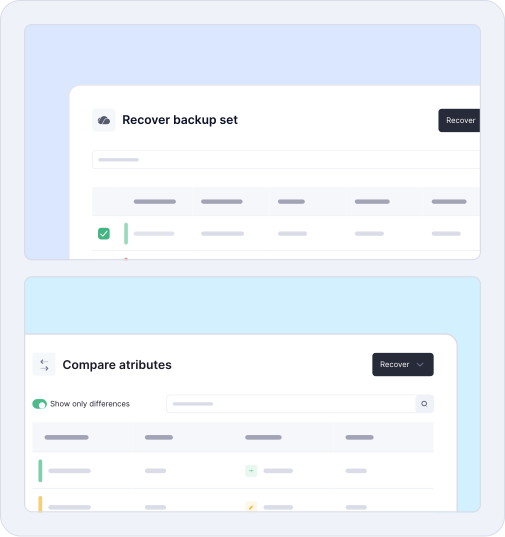
When evaluating backup and recovery platforms, MSPs should focus on operational efficiency, recovery speed, and scalability.
Key evaluation areas include:
- Multi-tenant management for MSP scalability
- Fast endpoint recovery to reduce downtime
- Immutable storage for ransomware protection
- Automation to reduce operational overhead
- Centralized reporting for customer visibility
Leading MSP backup platforms include Datto, Veeam, Acronis, Cove Data Protection, and Commvault. The right solution simplifies operations while improving resilience, profitability, and customer retention. As ransomware threats evolve, fast Windows server and endpoint recovery has become a key MSP differentiator.
Book a demo to see how faster recovery and simplified security help your MSP reduce downtime, retain customers, and grow with confidence.
Fast recovery builds lasting customer trust.
What Sets Resilient MSPs Apart
MSPs that can recover quickly, communicate clearly, and maintain customer uptime will strengthen trust, improve retention, and position themselves as strategic cybersecurity partners rather than reactive service providers. The most successful providers focus on:
- Recovery readiness
- Immutable backup architectures
- Automated monitoring
- Standardized recovery procedures
- Endpoint visibility
- Continuous testing
Effective recovery is not just about restoring systems; it is about helping MSPs protect revenue, reduce operational disruption, and grow with confidence.
Book a demo today to see how integrated backup recovery, ransomware resilience, and simplified security operations can help your MSP reduce downtime, improve customer retention, and grow with confidence.
Ready to get started?
